
Phone habit reset
The app for when your phone owns you back
Checking your phone 100 times a day isn't weakness — it's a habit loop that was built deliberately, and it can be unbuilt the same way. Bloky gives you the structure: protected hours, honest friction, visible progress, and zero shame.
Phone addiction is a design problem, not a discipline problem
Every mechanism in a modern feed — pull-to-refresh, infinite scroll, streaks, badges, algorithmic surprise — is a variable-reward loop borrowed from slot machines. You lose hours not because you're weak, but because thousands of very smart people are paid to make sure you do. Recognising that is step one, because shame keeps the loop closed: feel bad, scroll to feel better, feel worse.
Step two is accepting what the research on habit change says: environment beats intention. People who successfully cut phone use don't have more willpower — they arrange their day so the phone is less available at the moments they're weakest. Fewer cues, more friction, visible progress.
That's a systems job, and it's exactly the system Bloky implements: scheduled unavailable hours (starting with the most damaging ones, before sleep), friction on impulse opens, and a feedback loop of streaks and weekly reports that rewards recovery instead of punishing relapse.
How Bloky helps you break the habit
Not a digital detox bootcamp — a permanent structure that makes the phone a tool again.
Protected hours, every day
Your nightly schedule makes the worst hours — the ones before sleep — automatically phone-quiet. The biggest chunk of compulsive use disappears without a daily decision.
Friction where reflexes live
The 100-times-a-day checking habit is muscle memory. Bloky's pause screen interrupts it, and the 20-tap pass makes every open a conscious choice.
Focus sessions for cravings
Feel the pull mid-afternoon? Start a focus block from 15 minutes to 4 hours. Urges pass; sessions make sure you're not scrolling when they do.
Streaks that rebuild identity
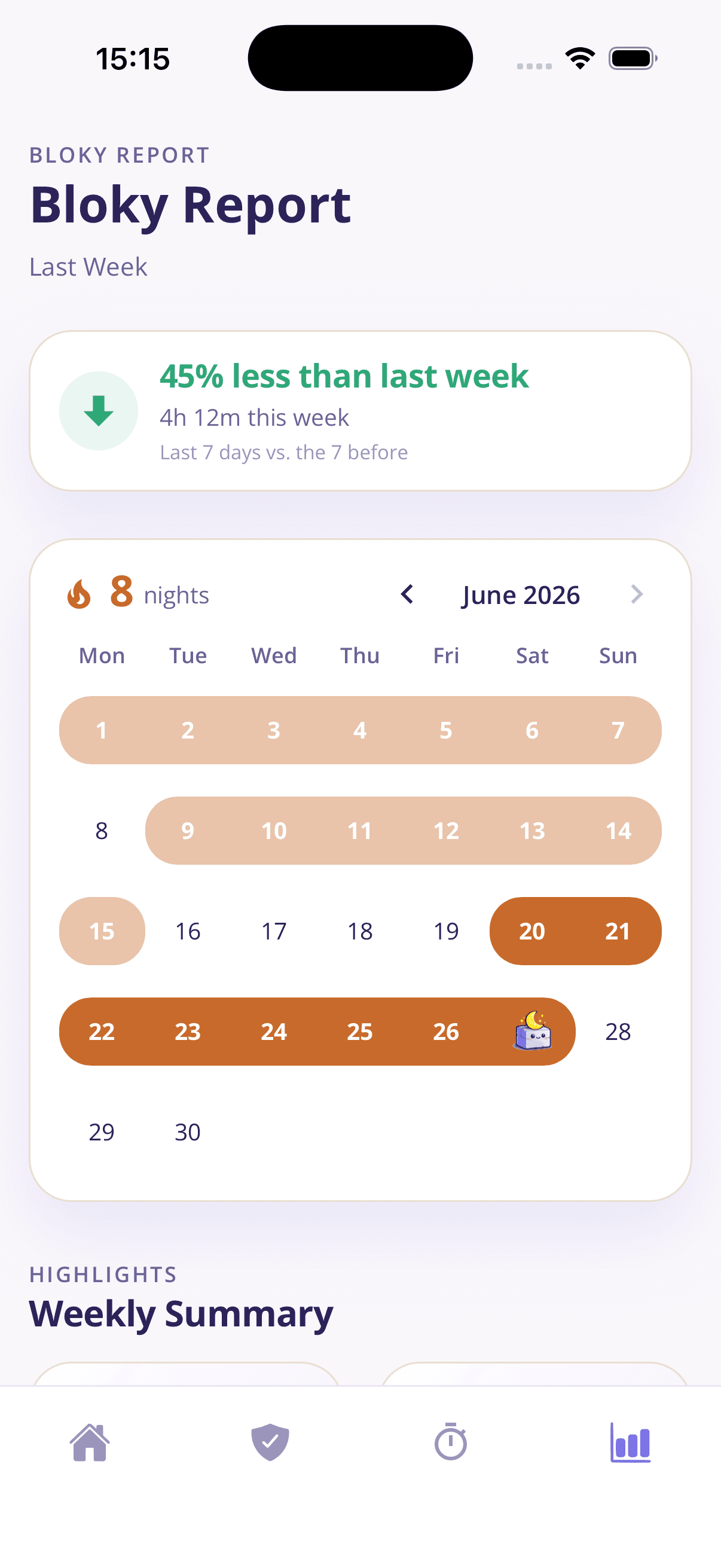
Each protected night extends your streak. Habit research is clear that identity follows evidence — and a 20-night streak is evidence you're someone who sleeps instead of scrolls.
A report, not a guilt trip
The weekly Bloky Report shows app time versus last week — down 45%? You'll see it. A bad week? The streak calendar just shows you where to restart.
Kindness as a feature
A friendly mascot and calm copy instead of red warnings. Shame drives relapse; Bloky is deliberately built without it.
Your first week off autopilot
- 1
Protect your nights first
Set the bedtime schedule and block your biggest time-sinks. Nights are where the habit does the most damage.
- 2
Add daytime focus blocks
Use focus sessions during your vulnerable hours — the after-lunch slump, the evening couch.
- 3
Watch the numbers move
Check your weekly report. Falling app time and a growing streak carry you through week two and beyond.
Frequently asked questions
Honest answers about phone addiction and what actually helps.
How do I know if I'm addicted to my phone?
- The practical signs: you check it without deciding to, you lose time you meant to spend elsewhere, you scroll in bed past the point of enjoying it, and cutting back keeps failing. Clinicians debate the word "addiction," but the loop is real regardless — and the treatment is the same either way: reduce cues, add friction, track progress. That's what Bloky automates.
What is the best app to stop phone addiction?
- Look for three things: scheduled blocking (so protection doesn't depend on daily motivation), bypass friction that's firm but not absolute (hard locks get uninstalled), and progress tracking (habit change needs feedback). Bloky was built around exactly those three, with a bedtime-first design because nighttime use is where most compulsive hours hide.
How do I stop checking my phone every 5 minutes?
- You can't out-will a reflex, but you can interrupt it. During Bloky's blocked hours and focus sessions, the reflexive open hits a pause screen instead of a feed — and after a week or two of interrupted repetitions, the urge itself fades. Pairing this with keeping the phone out of reach makes it fade faster.
How long does it take to break phone addiction?
- The compulsive edge dulls fast — most people notice weaker urges within one to two weeks of consistently protected hours. The deeper reset takes a couple of months, which is why sustainability matters more than intensity. Bloky's streaks and per-day schedules are designed for months, not a heroic week.
Can I break phone addiction without giving up my phone?
- Yes — and for most people that's the only version that works, since your phone also carries your maps, banking, and family chat. Bloky never touches the useful parts; it only pauses the apps you choose, during the hours you choose. The phone stays a tool; the slot machine gets office hours.
Why do I always relapse after cutting my screen time?
- Usually because the plan relied on motivation, which is a finite resource, or on shame, which backfires. Sustainable change needs structure that runs when motivation is gone — an automatic schedule — plus a forgiving restart when you slip. In Bloky, a bad night just means the streak restarts tomorrow; the schedule is still there, unbothered.
Learn more
Guides that go deeper on the habit behind the problem.
Revenge bedtime procrastination
Staying up late to reclaim 'me time' — then paying for it all day? What revenge bedtime procrastination is, why it happens, and a realistic plan to stop.
How to stop scrolling at night
Can't stop scrolling in bed? A practical 5-step plan: why willpower fails at night, how to set a digital sunset, and how to make the change stick within a week.
Bedtime routine for adults
A realistic bedtime routine for adults who currently 'wind down' by scrolling: a 60-minute template, why routines fail, and how to make yours automatic.
Related solutions
App blocker for iPhone & Android
A strict-but-kind app blocker built around sleep, focus, and real behaviour change.
Block apps at night
Set a nightly schedule that blocks distracting apps at bedtime and unlocks them in the morning.
Stop doomscrolling
Break the late-night scroll loop with scheduled blocks and gentle friction.
Download Bloky
Take the phone back tonight.
Download Bloky, protect your nights first, and let the streak rebuild the habit — kindly.
Free to download on the App Store and Google Play. Premium includes a 3-day free trial.